
Assessing pelvic position
Using cameras and placed markers, the pelvic position can be analysed. This can provide indications of asymmetries or unusual load patterns.
Analysis of movement and load
Everyone walks differently. With professional gait and running analysis, we record movement patterns, pressure distribution and load. The results help us adapt insoles, shoe modifications or orthopaedic shoes more precisely.
During gait analysis, we assess important areas that can influence load, stability and roll-off movement.
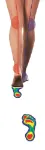
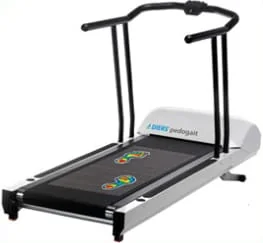
Pressure sensors in the walking surface record how load is distributed while walking. This can make pressure peaks, one-sided loads or unusual roll-off patterns visible.
This information can help plan insoles or orthopaedic adjustments more precisely.
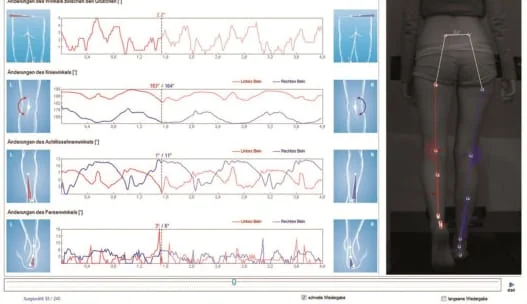
Side-facing cameras support the analysis of your movement sequence. This creates a more detailed picture of your gait pattern and body posture during movement.
The collected data serves as a working basis for individual orthopaedic care.
Using cameras and placed markers, the pelvic position can be analysed. This can provide indications of asymmetries or unusual load patterns.
With this measurement we can detect possible X-legs (knock knees) or O-legs (bow legs). With the appropriate shoe modifications or insoles we can counteract this in a targeted way.
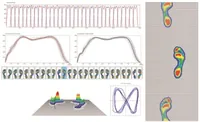
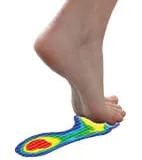
Pressure sensors in the walking surface measure the pressure distribution. This measurement allows us to detect pressure peaks. With orthopaedic insoles — using various paddings, wedges and recesses — these pressure peaks can be neutralised.
A gait analysis can be useful if discomfort occurs while walking, standing or running, if pressure points develop or if a fitting should be planned more precisely.
Step by step, we collect data that can help adapt your care more precisely — for more relief, stability and comfort in everyday life.
Request gait analysis